Breathing Circle

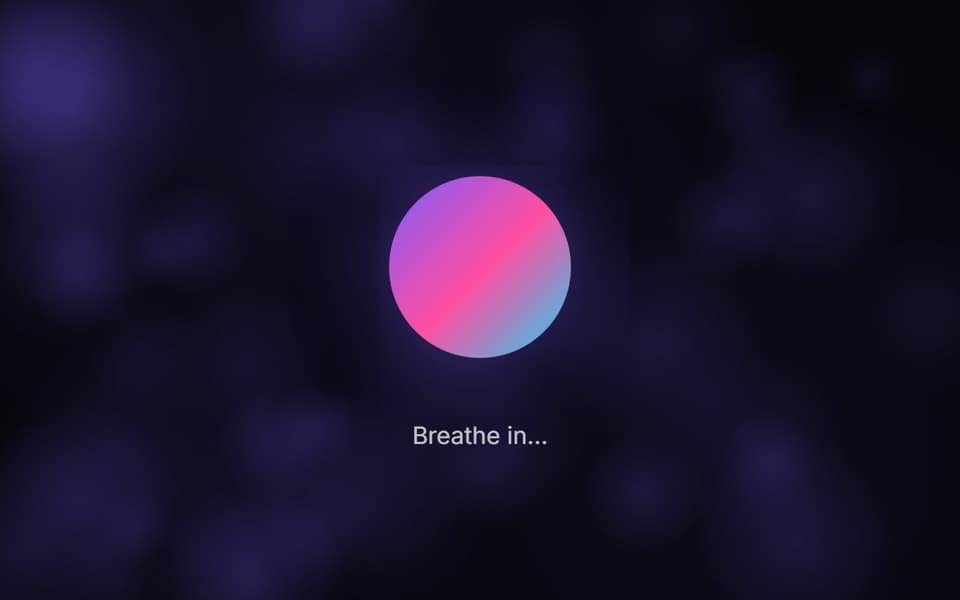
One shape, one steady rhythm: a circle grows as you breathe in, holds, then shrinks as you breathe out. Nothing else on screen competing for attention, just a single visual cue to match your breath against.
The Breathing Circle vs. Gradient Meditation
Both tools guide breathing with a shape that expands and contracts, and it’s a fair question why there are two. Gradient Meditation leans on color as a second cue alongside the shape change, shifting tone as it expands and contracts. The Breathing Circle strips that back to just the shape itself, a single color, a single form, nothing shifting except size.
Some people find the extra color cue in Gradient Meditation helps; others find one less moving variable easier to follow. Neither is more correct, it’s a matter of which is easier for you personally to track without thinking about it.
How to Follow the Rhythm
Breathe in as the circle expands, hold for a beat once it reaches full size, breathe out as it contracts back down, then hold briefly again before the next cycle starts. Most versions default to an equal four part count, a version of box breathing, though the exact timing can typically be adjusted if the default pace feels too fast or too slow to sustain comfortably.
Why Keeping It Minimal Can Help
A single expanding and contracting shape asks less of your attention than a busier visual, no color to track, no numbers to watch, just size. That matters more than it sounds for anyone who finds a cluttered or overly stimulating visual counterproductive during a moment meant to calm things down.
It’s a similar principle to why diaphragmatic breathing instruction tends to stay deliberately simple too, focus on one thing (the breath, the belly rising and falling, or in this case a shape) rather than juggling several cues at once. Fewer moving parts generally means less to get wrong, which matters most in the exact moments this kind of tool tends to get used.
Using The Breathing Circle Alongside Other Tools
This fits well before a stressful meeting, during a short break, or as part of a wind-down routine before sleep. If you’d rather have the added color cue, Gradient Meditation covers that version instead. For something to simply look at without a guided pace, Candle Flame is the passive alternative. And if you’re timing a longer session around a few rounds of breathing, a Focus Timer pairs well alongside it.
FAQ
How is this different from Gradient Meditation?
Gradient Meditation adds a shifting color cue alongside the shape change. This version keeps it to shape only, a single color, no gradient.
What breathing pattern does the default timing follow?
Most versions default to an equal four-part count, similar to box breathing, inhale, hold, exhale, hold.
Can I change the timing?
Depending on the build, yes, many breathing circle tools let you adjust the duration of each phase.
Do I need to download anything?
No, it runs as a page in your browser, nothing to install.
Is this a treatment for anxiety?
No, it’s a general relaxation tool rather than a medical treatment, and it isn’t a substitute for professional care if you’re managing an ongoing condition.
Is any of my data collected while I use it?
No, it runs locally in your browser with nothing uploaded.
Which one should I try first, this or Gradient Meditation?
Whichever sounds less distracting to you personally. If you’re not sure, try both once and notice which one you stop thinking about faster, that’s usually the better fit.


