Good night Stars
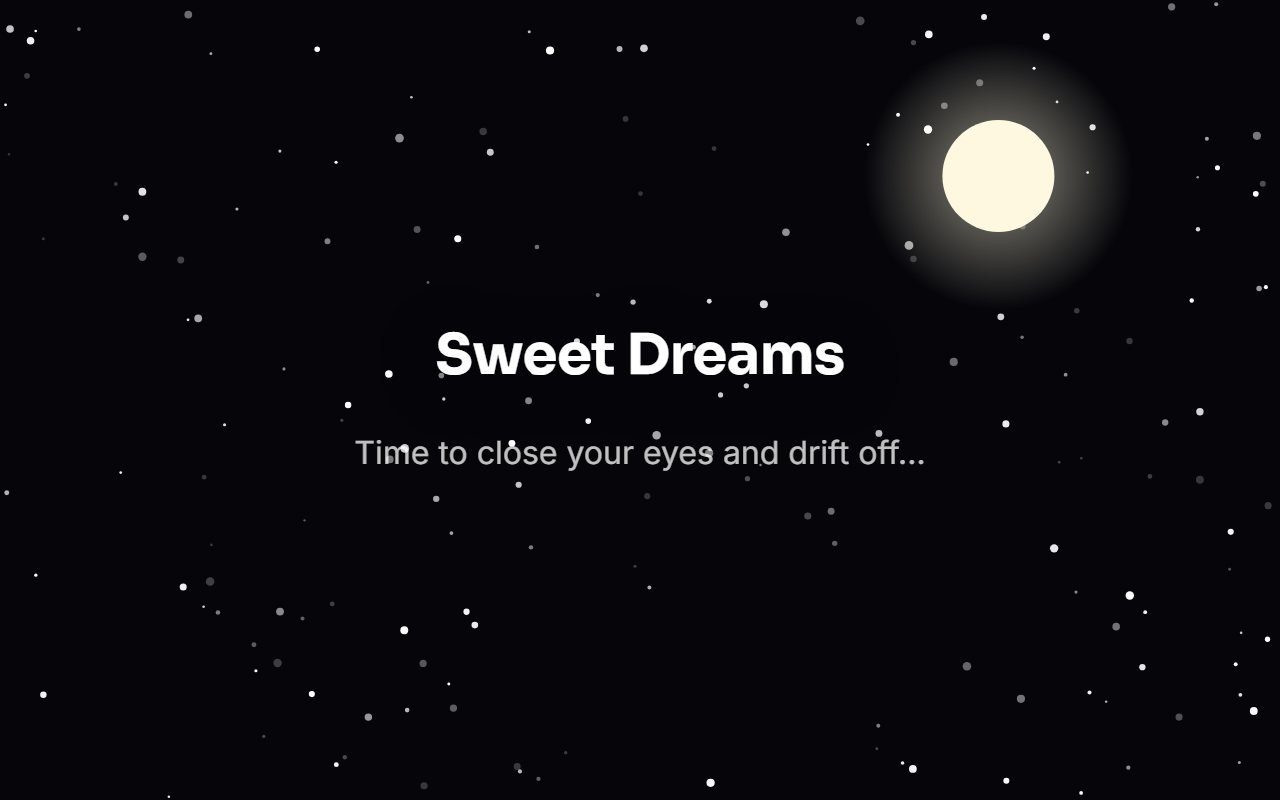
Soft stars drift slowly across a dark screen, dim and gentle enough to sit beside a child’s bed as part of a calm wind down before sleep. No app to install, no plugging anything in, just a phone, tablet, or old laptop propped nearby.
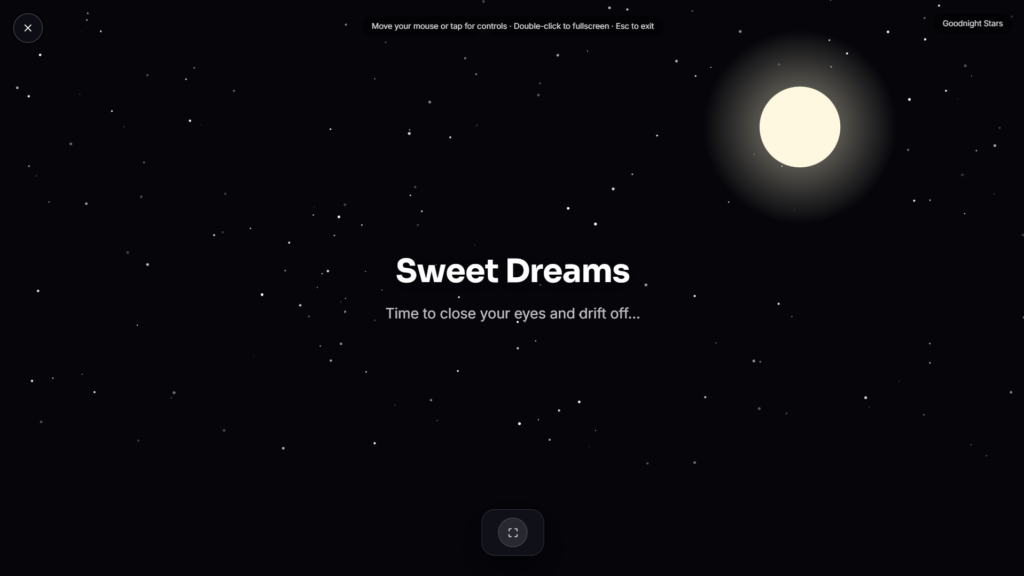
Good Night Stars vs. Starfield
Both pages show moving stars, so it’s worth being clear about the difference. Starfield is built as a general space visual, brighter, with a sense of speed and depth as stars appear to rush past. Good Night Stars is deliberately simpler and dimmer, slower movement, softer light, built specifically to sit quietly in a child’s room at bedtime rather than to look like flying through space.
Why a Consistent Bedtime Cue Helps
Pediatric sleep guidance consistently points to the same idea: a predictable, calm routine before bed helps children fall asleep more easily and settle into more consistent sleep patterns over time. Bright light, particularly the blue toned light many screens emit by default, is generally discouraged right before sleep since it can interfere with the body’s natural signal to wind down. A nightlight style visual like this can become part of a calming cue instead, something a child comes to associate specifically with winding down, provided the light stays dim and warm-toned and the routine stays consistent rather than becoming another stimulating screen activity right before bed.
Getting the Most Out of It for Bedtime
- Dim the screen brightness as low as it will comfortably go, this is meant to be a soft glow, not a bright display.
- Use it as part of a routine, after a bath or a story, rather than as something to actively watch or interact with.
- Keep the device propped at a distance rather than held close, the same way you would with a physical nightlight.
- Turn off other notifications on the device beforehand so nothing interrupts the calm once it starts.
Who This Is Built For
This suits parents and caregivers looking for a simple, screen-based night light for a child’s bedtime routine, as well as older kids who like a gentle visual to fall asleep to. If your child is more drawn to a moving color visual than stars specifically, Aurora Waves is a softer alternative worth trying. And if bedtime also involves some quiet counting or shape practice beforehand, Counting Fun or 2D Shapes pair well earlier in the same routine.
FAQ
How is this different from Starfield?
Starfield is brighter and built to feel like moving through space. This one is slower and dimmer, made specifically to be gentle at bedtime.
What age is this suitable for?
It works well for toddlers through early school age, though the right fit really depends on what helps your own child settle at night.
Should I leave it running all night?
That’s a personal choice for your family’s routine. Some parents use it just during the wind down period, others let it run softly through the night as a low light substitute for a nightlight.
Do I need to download anything?
No, it plays directly in the browser, nothing to install.
Is any of my child’s activity or data collected?
No, it runs locally in the browser with nothing uploaded or stored.
Will the screen’s light be too bright for a dark room?
Dim your device’s brightness as low as it goes before using it at bedtime, a phone or tablet at full brightness will be far too bright for a dark room.
Is this meant to replace reading a bedtime story?
No, it works better as a calming visual alongside or after a story rather than a replacement for the bonding time a shared story provides.