AI Typing Indicator

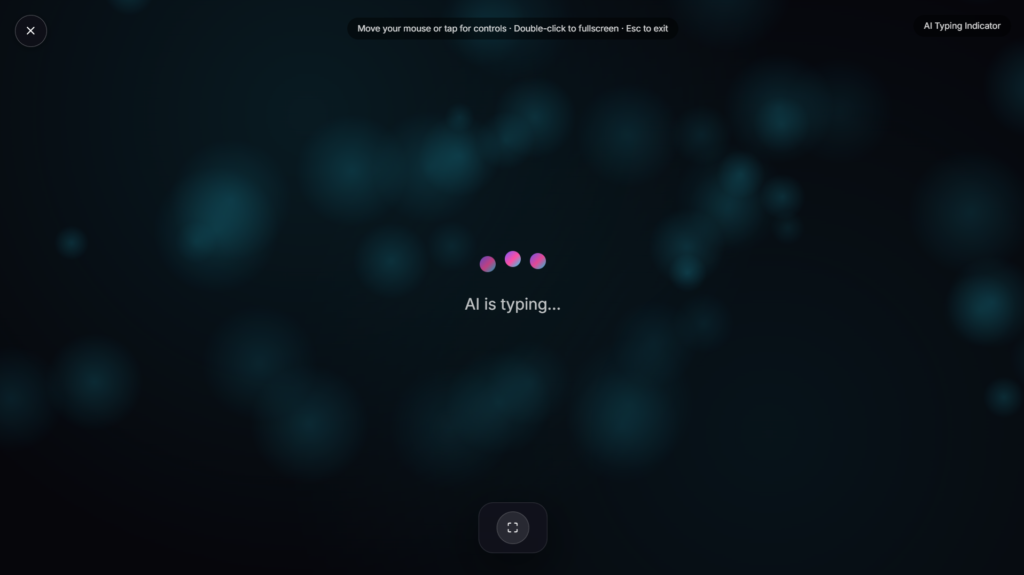
A loading screen fills the display exactly the way installing update progress does on a real computer, a percentage climbing, a spinner turning, a message warning not to turn the device off. It’s built purely for the prank, nothing on the actual device is affected.
What Makes This Loading Animation Convincing
The details are what sell a fake update prank like this. Some of the most convincing versions of this prank online use the actual system fonts Microsoft ships with Windows, and replicate the real boot spinner by cycling through the exact same sequence of characters the genuine spinner uses, timed at the same speed as Windows Update itself. Small touches carry a lot of weight here: a percentage that occasionally pauses or ticks up unevenly reads as far more authentic than one that climbs in perfectly smooth, even increments, since real installing update processes rarely progress at a constant rate. That kind of attention to the loading animation itself, not just the progress bar and message text, is what separates a prank someone glances at and dismisses from one that actually holds up under a closer look.
How to Run the Loading Animation Convincingly
Set it running while the person is away from their device, then let it sit for however long feels right before revealing the joke. The progress bar climbing steadily, occasionally slowing down the way installing update processes on a real system sometimes do, adds to the illusion far more than a screen that instantly jumps to 100%.
Using This Responsibly
This prank works best on people who won’t panic over the idea of losing unsaved work, and it’s worth skipping entirely on a shared work computer where someone might genuinely believe they’re at risk of losing something important. A quick reveal once the joke has landed matters more here than with a purely visual prank, since this kind of joke can genuinely worry someone if left running too long, especially at work. If a fake damage effect appeals more than a fake update, LCD Liquid Damage or Broken Screen cover that instead.
More AI & Machine Learning

AI Thinking
Pulsing gradient orb "thinking" loader
Neural Network
Animated node & synapse graph, drifting and pulsing
Robot Face
Friendly blinking AI avatar face
AI Content Scan
Scanning line detecting AI-generated content
Deploying Model
Terminal-style ML deploy log